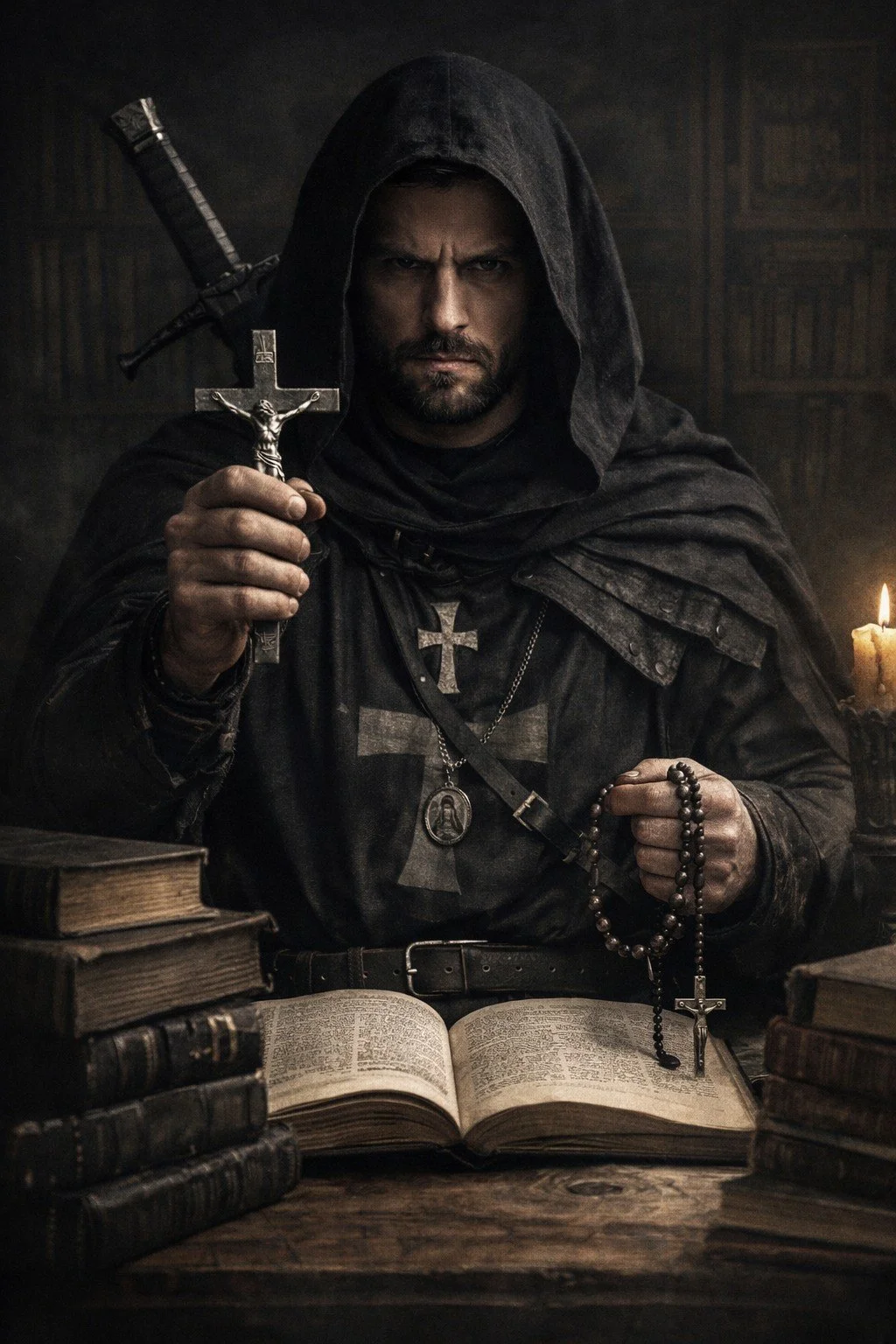
What is Truth? Defined.
I. Truth in the Catholic Tradition
1. What Truth Is (Classical Definition)
The Catholic Church inherits its understanding of truth from Aristotle, refined by St. Thomas Aquinas:
Truth is the conformity of the intellect to reality
(adaequatio intellectus et rei)
In other words:
A thing is true when it is known as it really is
Truth is discovered, not invented
Reality comes first; the mind conforms to it, not the other way around
This already puts Catholicism at odds with modern ideas like:
“My truth”
Truth as self-expression
Truth as a social construct
For Catholicism, truth exists whether or not I accept it.
2. God as the Source of All Truth
In Catholic theology:
God is Truth itself, not merely a truth-teller
All created truth flows from Him
Scripture:
“God is light, and in Him there is no darkness at all.” (1 John 1:5)
Aquinas teaches:
God’s intellect is reality
Our intellects participate in truth by knowing what God has made
So truth is not merely logical—it is ontological (about being itself).
3. Moral Truth and Natural Law
Because truth is rooted in reality:
Human nature has an objective structure
Human actions can be in harmony or conflict with that structure
Thus:
Moral truth is not based on feelings or consensus
Good and evil are real, not preferences
The Catechism summarizes:
“Truth or falsehood is the adequation of intellect and reality.” (CCC 2469)
II. “I Am the Way, the Truth, and the Life” (John 14:6)
When Christ says this, He is making one of the strongest claims ever uttered.
“I am the way, and the truth, and the life. No one comes to the Father except through me.”
Let’s take each term precisely, not sentimentally.
III. “I Am the Way”
Christ does not say:
“I show the way”
“I teach a way”
“I point toward a way”
He says I am the way.
Meaning:
Salvation is not primarily a philosophy
It is union with a Person
Practically:
The moral life is not self-improvement
It is conformity to Christ
Grace does not bypass nature; it heals and elevates it
IV. “I Am the Truth”
This is the most philosophically explosive claim.
Christ does not say:
“I speak Truth”
“I have Truth”
“I reveal Truth”
He says I am the Truth.
What This Means
Truth is personal
Truth is not merely propositions
Truth is fully revealed in the Person of Jesus Christ
Reality is Christ-centered
Creation makes sense because it is created through and for Him
All truths—scientific, moral, metaphysical—ultimately converge in Him
To reject Christ is to reject reality
This is why Catholicism does not treat false beliefs as “equally valid paths”. Yes—Extra Ecclesiam Nulla Salus.
Error is not just ignorance—it wounds the intellect
Aquinas writes:
Christ is Truth “inasmuch as all things are true by participation in Him.”
V. “I Am the Life”
Life here does not mean:
Biological existence
Emotional vitality
Personal fulfillment
It means divine life (zoē), shared by grace.
Christ alone:
Restores supernatural life lost by sin
Makes eternal life possible
Sustains life through the Sacraments (especially the Eucharist)
Thus:
Truth without life becomes abstraction
Life without truth becomes chaos
Christ unites both perfectly
VI. Why This Matters Today
Modern culture claims:
Truth is relative
Identity creates reality
Sincerity matters more than correctness
Christ contradicts all of it.
Catholicism therefore insists:
Truth judges us—we do not judge truth
Love requires truth
Freedom is not self-definition, but conformity to reality
As Christ says:
“The truth will set you free.” (John 8:32)
Not because truth is comfortable—but because it is real.
VII. In One Sentence (Catholic Summary)
Truth is the conformity of the mind to reality; Christ is Truth itself, because He is God made visible, and to live in truth is to live in union with Him.
_________________________________________________
Truth in the Catholic Perspective
In Catholic teaching, truth is fundamentally identified with God Himself, who reveals it fully in Jesus Christ, the Word made flesh. It transcends human reason yet is accessible through creation, Revelation, and the Church's Magisterium, uniting faith and reason in a harmonious pursuit of the divine good. [1] [2] [3] [4].
Truth as Divine Reality and Revelation
Catholic doctrine presents truth not as a mere abstract concept but as the very essence of God, who is "the beginning and end of all things" and makes Himself known through creation and Revelation.[5] Through divine Revelation, God communicates "those divine treasures which totally transcend the understanding of the human mind", enabling humanity to grasp religious truths with "ease, with solid certitude and with no trace of error".[6]
This Revelation culminates in Christ: "now at last in these days God has spoken to us in His Son", who is the "fullness of all revelation".[7] As Dei Verbum affirms, Christ perfected Revelation through His words, deeds, death, resurrection, and sending of the Holy Spirit, establishing the "new and definitive covenant" with no further public revelation expected.[8] God speaks to humanity "as friends", inviting them into fellowship, with deeds and words forming an inner unity that manifests salvation's deepest truths.[9]
The Church proclaims this truth, echoing St. John: "We announce to you the eternal life which dwelt with the Father and was made visible to us", so that all may believe, hope, and love.[10] Truth, therefore, is beautiful in itself, expressed in words, creation's harmony, and even non-verbal forms evoking the heart's depths and God's mystery.[11]
Truth and the Harmony of Faith and Reason
Human reason, illuminated by God, naturally apprehends truth from created reality: "God... can be known with certainty from created reality by the light of human reason".[12] Yet Revelation elevates this, making truths accessible beyond reason's unaided grasp.[13]
Fides et Ratio* underscores this unity: "faith is superior to reason [but] there can never be a true divergence between faith and reason", as the same God authors both.[14] Reason's drive toward truth dignifies human life, aiding deeper faith understanding and Gospel proclamation.[15] Modern philosophy, while advancing knowledge, risks forgetting transcendent truth, reducing persons to pragmatic criteria.[16]
The intellectus fidei—faith's understanding—grasps Revelation's logical consistency, revealing salvation history in Christ.[17] Reason must articulate knowledge of creation and humanity, presupposing a philosophy grounded in objective truth.[18] Revelation illumines philosophy, fostering a "philosophy consonant with the word of God" where faith and culture meet.[19]
"To believe is nothing other than to think with assent... Believers are also thinkers: in believing, they think and in thinking, they believe."[20]
The Church as Pillar and Bulwark of Truth
The Church, established by Christ as the "one Mediator", communicates truth and grace visibly. She is the "pillar and mainstay of the truth", receiving Christ's mandate to proclaim saving truth to all nations. Her Magisterium discerns philosophical matters, affirming faith-reason inseparability against rationalism and fideism.
The faithful share Christ's prophetic office, offering a "living witness" through faith, charity, and praise. Anointed by the Holy One, the whole body... cannot err in matters of belief via supernatural discernment under Magisterial guidance. The Holy Spirit distributes charisms for the Church's renewal, judged by leaders to ensure authenticity.
God's truth is his wisdom, which commands the whole created order and governs the world. The Church announces moral principles, judging human affairs for persons' rights and souls' salvation.
Truth, Conscience, Morality, and Freedom
Truth grounds morality: "only the freedom which submits to the Truth leads the human person to his true good." Conscience recognizes moral good via reason's law, judging acts responsibly; it witnesses universal good and evil, urging virtue and mercy.
Acknowledging intrinsic evil upholds human dignity, rejecting theories contradicting integral truth about man. God, the Supreme Good, founds commandments, especially negative ones prohibiting dignity-violating acts. Denial of transcendent truth breeds totalitarianism, undermining just relations.
Truth in words... is necessary to man, who is endowed with intellect, carrying spiritual joy and beauty. Science and faith harmonize, as both derive from God.
Conclusion
Catholic teaching defines truth as God's self-communication in Christ, knowable by reason-illuminated faith, safeguarded by the Church, and essential for moral freedom. It calls believers to pursue this truth relentlessly, wedding thought to assent for authentic human flourishing. In a world adrift from objectivity, the Church invites rediscovery of truth's splendor in Jesus, the Way, Truth, and Life.
ENDNOTES
[1] Dei Verbum, 6.
[2] Dei Verbum, 2.
[3] Dei Verbum, 1.
[4] Dei Verbum, 4.
[5] Lumen Gentium, 8.
[6] Lumen Gentium, 17.
[7] Lumen Gentium, 12.
[8] Lumen Gentium, 7.
[9] Fides et Ratio, 53.
[10] Fides et Ratio, 66.
[11] Fides et Ratio, 79.
[12] Fides et Ratio, 5.
[13] Veritatis Splendor, 83.
[14] Veritatis Splendor, 61.
[15] Veritatis Splendor, 99.
[16] Veritatis Splendor, 84.
[17] CCC, 2500.
[18] CCC, 2032.
[19] CCC, 216.
[20] CCC, 159.