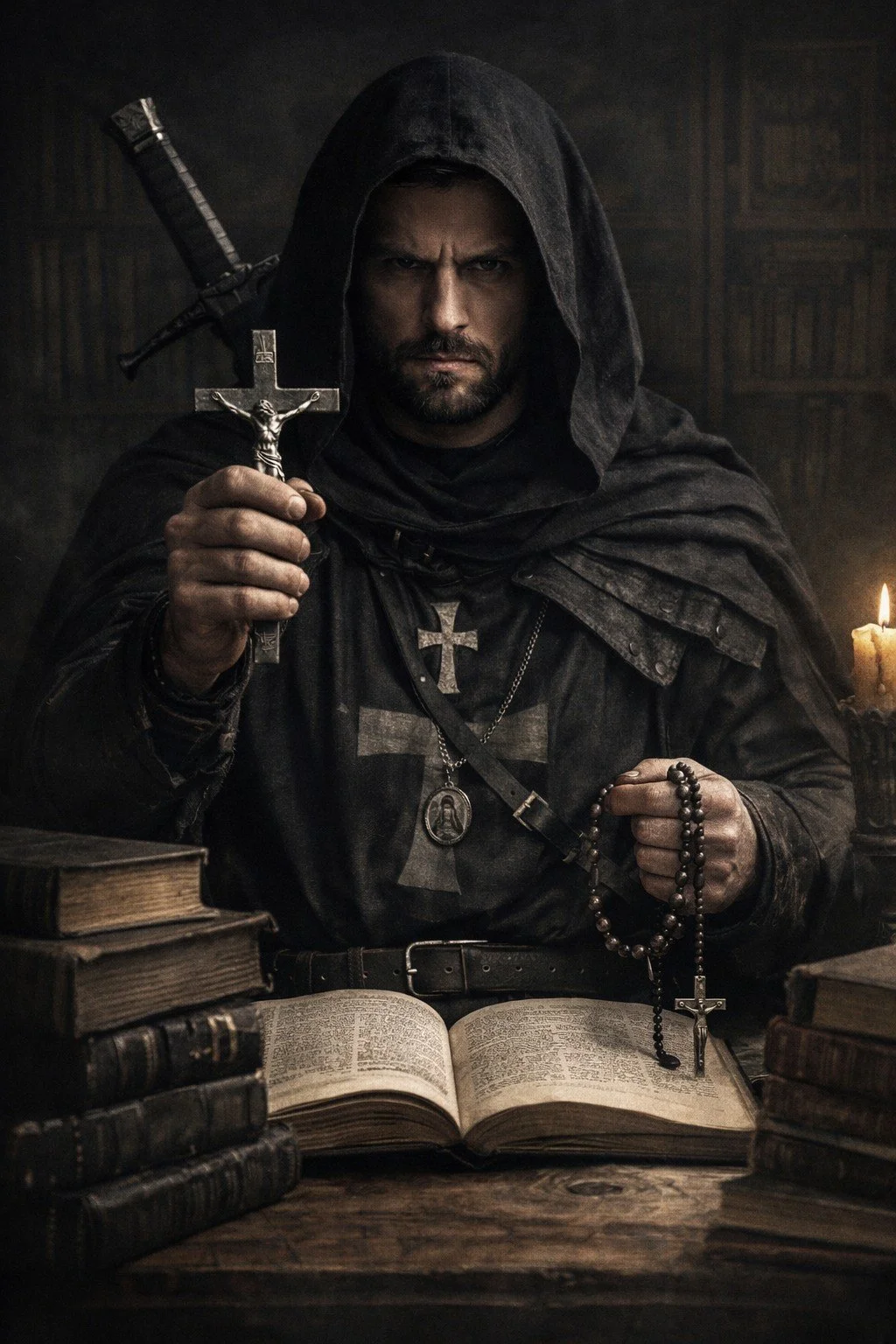
Tradition on the Brink.
The Struggle for Catholic Continuity in an Age of Liturgical Retrenchment
Tradition as a Test of Communion
Few questions in contemporary Catholic life are as emotionally charged—or as theologically misunderstood—as the status of the Church’s traditional liturgy and those who seek to live by it. For more than half a century, the Catholic Church has wrestled with the consequences of rapid post-conciliar reform, pastoral experimentation, and an uneven reception of Vatican II. Within this contested terrain, the story of the Society of St. Pius X (SSPX) has become both a symbol and a fault line: a symbol for those who fear doctrinal and liturgical rupture, and a fault line that has fractured communities, families, and ecclesial trust.
Yet the SSPX story cannot be read in isolation. It must be read alongside the deliberate, patient, and often costly efforts of Rome to preserve continuity through canonical obedience, most clearly embodied in the Priestly Fraternity of Saint Peter (FSSP) and the Institute of Christ the King Sovereign Priest (ICKSP). These institutes, born directly from the trauma of 1988, represent an alternative path—one that insists tradition and communion are not mutually exclusive.
In the present moment, however, that path has grown perilously narrow. With the suppression of Ecclesia Dei, the juridical rollback of Summorum Pontificum, and the restrictive regime inaugurated by Traditionis custodes, traditionalist communities—especially those faithfully obedient to Rome—now find themselves exposed. Against this backdrop, renewed reports that the SSPX intends to consecrate bishops without papal mandate threaten not merely its own canonical future, but the already fragile toleration extended to all who love the Church’s inherited rites.
The greatest danger today is not merely schism, but the collateral damage such acts inflict on faithful Catholics who seek nothing more radical than continuity with the faith of their forefathers within the communion of the Church.
I. 1965–1970: After the Council, Before the Crisis
The close of the Second Vatican Council in 1965 inaugurated a period of extraordinary change. While the Council itself mandated reform “in continuity with tradition,” the speed and scope of implementation—especially in liturgical life—outpaced both catechesis and consensus. Experimental liturgies, vernacularization, architectural iconoclasm, and a sharp decline in traditional seminary formation created what Joseph Ratzinger later described as a “crisis of interpretation,” not of the Council itself.
It was in this environment that Archbishop Marcel Lefebvre, a former missionary and superior general of the Holy Ghost Fathers, founded the SSPX in 1970 as a priestly society dedicated to “the priesthood of Our Lord Jesus Christ according to the Roman Catholic tradition.” Importantly, the Society was canonically erected by competent ecclesiastical authority. This fact is not incidental: the SSPX did not begin as an act of rebellion, but as an attempt to preserve priestly formation amid perceived collapse.
The crisis emerged not from the Society’s existence, but from its resistance to the post-conciliar liturgical and doctrinal trajectory as it unfolded in practice.
II. 1975–1988: From Resistance to Rupture
By the mid-1970s, relations between the SSPX and ecclesiastical authority deteriorated sharply. Questions of obedience—especially whether resistance to certain reforms could be justified by a perceived “state of necessity”—came to dominate the dispute. Canonically, Rome moved toward treating the Society as lacking legitimate standing; practically, the SSPX continued to operate seminaries, ordain priests, and minister to the faithful.
This period is crucial for understanding later developments. The SSPX increasingly articulated an ecclesiology in which extraordinary circumstances justified extraordinary measures, including ministry without canonical mission. While classical canon law does recognize necessity as mitigating culpability in some cases, Rome consistently rejected its application to the ongoing, structural rejection of ecclesiastical governance.
The fault line was fully exposed in 1988.
III. 1988: Episcopal Consecration and the Logic of Communion
On June 30, 1988, Archbishop Lefebvre consecrated bishops without papal mandate. Canon law treats this act with exceptional severity because bishops are not merely local ministers; they are successors of the apostles, and their consecration touches the heart of ecclesial unity.
John Paul II, in his apostolic letter Ecclesia Dei, stated unequivocally:
“Such disobedience—implying in practice the rejection of the Roman primacy—constitutes a schismatic act.”
The Pope’s language was juridically precise. He did not declare the SSPX formally schismatic in every sense, but he identified the act as objectively schismatic in nature. This distinction matters: it preserved the possibility of reconciliation, even while affirming the gravity of the rupture.
IV. Ecclesia Dei: Rome’s Choice for Healing, Not Erasure
Ecclesia Dei is often cited only for its condemnation. This is a profound mistake. Its lasting significance lies in what followed: the deliberate creation of structures to preserve traditional liturgical life in communion.
The FSSP: Obedience as Witness
The FSSP, founded immediately in the wake of 1988, consisted of priests who shared the SSPX’s liturgical and theological concerns but refused to separate themselves from Rome. Canonically erected as a society of apostolic life of pontifical right, the FSSP embodied John Paul II’s conviction that fidelity to tradition must include fidelity to ecclesial authority.
The ICKSP: Culture, Beauty, and Restoration
The ICKSP, founded in 1990, further developed this vision by integrating sacred art, music, and a comprehensive cultural apostolate. Its later recognition as a pontifical-right society confirmed Rome’s willingness to invest juridical capital in traditional communities.
Together, these institutes formed what might be called the Ecclesia Dei settlement: tradition preserved, obedience maintained, communion safeguarded.
V. Benedict XVI: Continuity as Hermeneutic and Policy
The pontificate of Benedict XVI represented the intellectual and juridical apex of this settlement. In Summorum Pontificum, Benedict declared that the 1962 Missal “was never juridically abrogated” and affirmed that its use could not be considered foreign to the Roman Rite.
This was not a concession to nostalgia. It was an ecclesiological statement: the Church does not repudiate her own worship.
Benedict’s 2009 remission of the SSPX bishops’ excommunications further clarified the landscape. In his letter to the bishops of the world, he wrote:
“The fact that the Society of St. Pius X does not possess a canonical status in the Church is not, in the end, based on disciplinary but on doctrinal reasons.”
The distinction is decisive. Discipline can be lifted. Doctrine must be reconciled.
VI. Francis: Pastoral Mercy, Structural Reversal
Under Francis, the Church witnessed a paradoxical approach to tradition. On the pastoral level, Francis granted SSPX priests faculties to hear confessions and later facilitated canonical solutions for marriages. These acts recognized the good faith of the faithful who approached SSPX clergy.
Structurally, however, Francis reversed the Ecclesia Dei settlement. In 2019, he suppressed the Pontifical Commission Ecclesia Dei, subsuming its work into the doctrinal dicastery. The symbolic meaning was unmistakable: tradition was no longer treated as a pastoral reality requiring protection, but as a doctrinal problem requiring containment.
VII. Traditionis custodes: From Integration to Restriction
With Traditionis custodes, the juridical environment changed dramatically. The older liturgy was no longer framed as an extraordinary form of the Roman Rite, but as a concession requiring explicit episcopal permission and strict limitation.
For the FSSP, ICKSP, and similar institutes, this created a state of conditional existence. Though exemptions were granted, they were discretionary and revocable. Communities that had staked their identity on obedience suddenly found obedience offered no guarantee of stability.
VIII. The SSPX Today: Escalation and Its Consequences
Reports that the SSPX intends new episcopal consecrations without papal mandate under Leo XIV must be understood within this fraught context. Canonically, such an act would trigger automatic excommunication. Ecclesiologically, it would harden Rome’s perception that traditionalism itself tends toward separatism.
This is the central tragedy: the actions of one irregular society risk being imputed to all who love tradition.
IX. A Plea from the Brink: For Pastoral Preservation
At this moment, a desperate plea must be made—not for ideological victory, but for pastoral survival.
To Rome: recognize that Catholics who love the traditional liturgy are not enemies of unity. They are often the most catechized, sacramentally faithful, and vocationally fruitful communities in the Church.
To the SSPX: recognize that unilateral acts taken outside communion do not preserve tradition—they isolate it and imperil those who have chosen obedience at great cost.
To bishops: understand that suppressing legitimate expressions of tradition will not heal division, but deepen alienation.
And to the faithful: do not abandon communion out of despair. The faith of your forefathers was not a faith of rupture, but of perseverance within the Church.
The Church must find a way—urgently, generously, and courageously—to preserve living tradition without demanding that its heirs choose between conscience and communion.
Endnotes
John Paul II, Ecclesia Dei (1988).
Code of Canon Law (1983), can. 1382; revised Book VI (2021), can. 1387.
Benedict XVI, Summorum Pontificum (2007).
Benedict XVI, Letter to the Bishops (10 March 2009).
Secretariat of State, “Note on the Canonical Status of the SSPX” (2009).
Francis, Letter on Confession Faculties (2015).
Francis, Misericordia et misera (2016).
Pontifical Commission Ecclesia Dei, Marriage Norms (2017).
Francis, Motu Proprio suppressing Ecclesia Dei (2019).
Francis, Traditionis custodes (2021).