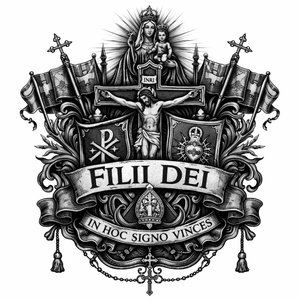
Columbus is the Line in the Sand—Pick a Side.
On October 7, 2026, Secretary of State Marco Rubio stood on the Pnyx in Athens. The Parthenon glowed behind him like a two-and-a-half-thousand-year-old middle finger to every culture that never built anything worth preserving. From that perch, he delivered a long overdue unapologetic defense of Western civilization. The date was deliberate. It was the third anniversary of the vicious Hamas massacre of October 7, 2023, when Islamists tortured, raped, burned, and filmed the slaughter of 1,200 people for the pleasure of the folks back home. That event should have settled whether every civilization shares the same basic math about the value of a human life. As we saw in the aftermath, it did not.
Rubio’s speech carried a long echo of the Battle of Lepanto, when the Holy League’s galleys sent the Ottoman fleet to the bottom of the Gulf of Patras. The victory meant Europe got to keep its church bells instead of its women in burkas. Date? October 7, 1571. The same week when Rubio was speaking, President Trump issued a Columbus Day proclamation. The speech defended the civilization. The proclamation declared its symbol.
In short: Columbus is a line in the sand. Time to pick a side.
Disney’s Pocahontas It Wasn’t.
First, the fairy tale. Pocohantas, warbles in the song “Colors of the Wind” a college catechism: that the Americas in 1492 were a hemisphere of gentle herbalists and carbon-neutral gardeners living in perfect harmony with Mother Earth until three Spanish boats arrived like a drunken Cornell fraternity party.
Reality was less photogenic. Across most of the hemisphere there was no wheeled transport, no iron tools and nothing resembling a phonetic alphabet. Mesoamerica produced primitive writing systems, but they belonged to a thin priestly caste and were mostly devoted to calendars, kings, and extracting tribute.¹ Meanwhile the university classroom insists that peoples who never put a wheel under anything except children’s toys were enlightened stewards of the planet, while the civilization that produced Aristotle, Aquinas, Chartres Cathedral, and the University of Paris was uniquely evil.
By 1492 Christendom had already fused Athens, Jerusalem, and Rome into one coherent, flourishing civilization. It possessed universities, written law, mechanical clocks, the magnetic compass, the printing press, Gothic engineering that still humiliates modern architects, and a theological claim that every human being is made imago Dei.
Now back to the song. Pocahontas croons with all her heart about “Painting with all the Colors of the Wind.” News Flash: The painting was rather monochromatic. The color was red and the hue was blood. The REAL Aztecs had a different relationship with the heart. They believed the sun ran on it. So the Mexica operated the largest public-works project in the hemisphere: not a cathedral, not a school, but a sacrificial assembly line where captives by the tens of thousands—were stretched over stone, opened with obsidian blades, and relieved of the heart so the solar system would continue on schedule.² Meanwhile, the Inca ran a forced-labor command economy that would have made the Soviet Gosplan look like a lemonade stand, complete with the occasional ritual child sacrifice on a mountaintop for atmospheric effect. Much of North America specialized in endemic warfare, public torture of prisoners, and, of course, slavery. If all this was simply a “different way of knowing,” then what these “civilizations” knew primarily was how to make their neighbors scream louder.
To claim these societies were moral equivalents of Christendom requires a degree of historical illiteracy that does not occur naturally. It is cultivated, under fluorescent lights, with a reading list and mandatory land acknowledgments.
The Admiral in Chains
Columbus did not invent cruelty or conquest. Both were thriving industries worldwide long before he raised sail. What he carried was a civilization that had already begun building the moral and legal machinery to put itself on trial.
Critics love to wave the fact that in 1500 the Spanish Crown hauled Columbus home in chains as if it were an indictment. Instead, it was an alibi.³ The Crown sent an investigator across an ocean, removed the most famous man in Europe from power, and shipped him back in irons. No Aztec tlatoani was ever arrested by his own priests for exceeding the recommended daily allowance of human hearts. Only one side of the encounter possessed the conscience—and the institutional capacity—to put its own men in the dock. That side had a crucifix on the mainsail and functioning Courts with Rule of Law.
A Selective Outrage Industry
The critics know this. That is why they prefer fairy tale to reality. They speak of “Indigenous ways of life” as though the pre-Columbian Americas were one big “Colors of the Wind” co-op of peaceful farmers rather than a crowded, quarrelsome, often cannibalistic patchwork of empires and tribes that spent centuries conquering, enslaving, and occasionally consuming one another. They treat Old World disease as a unique moral crime committed by men who had never heard of a microbe, while ignoring the ancient background radiation of plague, famine, and war that has shaped every human population since Cain. They demand that Columbus be judged by the moral standards of a 2026 HR seminar while granting the Aztec priesthood a permanent cultural exemption. That is not scholarship. It is selective outrage shopping for a mascot, and Columbus had the misfortune of having a statue on every main street.
The Obligatory Assertion Every Article of This Type Must Possess.
Western civilization is not perfect, because human beings are not perfect. Original sin remains the single most empirically verified doctrine in the Christian catalog; one need only read the news or sit through a faculty meeting. The difference is that the West generated the internal moral resources to condemn universally shared atrocities by its own principles. The Dominican friars who thundered against the encomienda, the Salamanca theologians who argued for the natural rights of the Indians, the popes who declared that the natives possessed rational souls and true dominion—none of this was learned from Aztec theology or Inca statecraft.⁴
The Fight Never Ended
That struggle did not end in 1492. It never ends. We see it in the streets today with the Red/Green Alliance flying Palestinian Flags. This is why the trans identifying Democratic Socialist will waive the Palestinian flag. It is the “omni-cause” and its target is Western Civilization and its symbols.
THE RED
Marxism rejects the divine origin of man and, with it, any personal responsibility that cannot be outsourced to a committee. In the Marxist account you are not made in the image of God; you are a temporary byproduct of economic forces, a sort of talking surplus value. Sin is relocated from the individual soul to “the system,” and the cure for the system is always more power in the hands of the people who claim to have memorized history’s script. The twentieth century stress-tested this anthropology on a few hundred million human beings and delivered the gulag, the Holodomor, the Great Leap Forward, and the killing fields. Those were not bugs. They were the feature set. When you deny that a man bears the image of God, he becomes raw material, and raw material gets processed.
THE GREEN
Islam does not teach the imago Dei as Christians and Jews understand it, with its radical implications for equality before the law, freedom of conscience, and hard limits on political power. Everywhere Islamic doctrine shapes the state, the results are not quaint exhibits: unequal legal status for believer and unbeliever, for man and woman, and in many places a death sentence for the apostate. Its most consistent and orthodox practitioners continued this program on October 7, 2023 when they livestreamed this. And this. [Extreme viewer discretion advised].
Why They Need Columbus to Be a Monster
Make no mistake: Columbus-haters understand all of this, which is why the campaign is so hysterical. If Columbus can be reduced to a cartoon villain, then everything he carried becomes contraband: the university, the hospital, the common law and the stubborn Catholic insistence that the weak possess rights the strong are obligated to respect. It is far easier to pretend the pre-Columbian world was an Eden of gender equity and net-zero emissions than to admit that a sailor from Genoa ferried across the Atlantic the most successful package of ideas and institutions humanity has ever produced.
So yes, my heart is with Columbus. As a result, my heart stays in my chest where I prefer it: beating, pumping blood, and still attached to the rest of me. Instead, my heart could be steaming in a priest’s fist on top of a pyramid or donated to a classless utopia that is always one more purge from paradise. I prefer the civilization that abolished slavery as a matter of principle to the ones that practiced [and practice] it as a matter of course.⁶ I prefer the imperfect, self-critical, endlessly quarrelsome West that built the hospital, university, and rule of law to every fantasy alternative currently on offer, whether it arrives wrapped in a rainbow, red star, or worse a black flag.
We must defend the man because he is the symbol. Defend the symbol because the civilization is worth defending. The alternative is not moral purity. It is suicidal empathy. The alternative is a return to an older, bloodier normal. None of those alternatives ever stumbled onto the strange and glorious idea that every human heart bears the image of its Maker. And those ideas are what keeps the heart in the chest.
Endnotes
On the absence of the wheel for practical transport, limited metallurgy outside certain regions, and the restricted nature of Mesoamerican writing systems (primarily the domain of elite scribes and focused on calendrical, dynastic, and tributary records), see Michael E. Smith, The Aztecs, 3rd ed. (Wiley-Blackwell, 2012), and Charles C. Mann, 1491: New Revelations of the Americas Before Columbus (Vintage, 2006). Even revisionist accounts acknowledge these technological and institutional gaps relative to contemporary Eurasia.
Estimates of the scale of Aztec human sacrifice are drawn from Spanish eyewitness accounts (notably Bernal Díaz del Castillo, The True History of the Conquest of New Spain) and indigenous sources preserved in Bernardino de Sahagún’s Florentine Codex. Modern historians, including Ross Hassig (Aztec Warfare: Imperial Expansion and Political Control, University of Oklahoma Press, 1988) and Matthew Restall, place the annual toll in the thousands to tens of thousands at the height of the empire, with major ceremonies involving mass killings. The Templo Mayor excavations and associated skull racks corroborate the literary evidence.
Columbus’s arrest in 1500, removal from office, and return to Spain in chains are documented in the official records of the Spanish Crown and in Columbus’s own correspondence. See The Libro de las Profecías of Christopher Columbus, ed. Delno C. West and August Kling (University of Florida Press, 1991), and Felipe Fernández-Armesto, Columbus (Oxford University Press, 1991).
Primary sources for the early Christian defense of indigenous rights include the 1511 Advent sermon of Antonio de Montesinos (recorded by Bartolomé de las Casas), Las Casas’s Brevísima relación de la destrucción de las Indias (1552), Pope Paul III’s bull Sublimis Deus (1537), and Francisco de Vitoria’s Relectio de Indis (1539). These texts form the foundation of the School of Salamanca’s natural-law arguments for the rational capacity and dominion of the native peoples.
On the medieval Christian intellectual roots of the scientific method, see Edward Grant, The Foundations of Modern Science in the Middle Ages (Cambridge University Press, 1996), and the work of Robert Grosseteste and Roger Bacon. Data on the post-1800 collapse of extreme poverty and the doubling of global life expectancy are summarized in Angus Deaton, The Great Escape: Health, Wealth, and the Origins of Inequality (Princeton University Press, 2013), and the long-run historical statistics maintained by Our World in Data.
The Christian contribution to the erosion and eventual abolition of slavery includes early medieval efforts (e.g., St. Bathilde in the seventh century), the near-disappearance of chattel slavery in high medieval Christian Europe, and the later evangelical and parliamentary campaigns that drove British and then global abolition. See David Brion Davis, The Problem of Slavery in Western Culture (Oxford University Press, 1966), and Rodney Stark, For the Glory of God: How Monotheism Led to Reformations, Science, Witch-Hunts, and the End of Slavery (Princeton University Press, 2003).