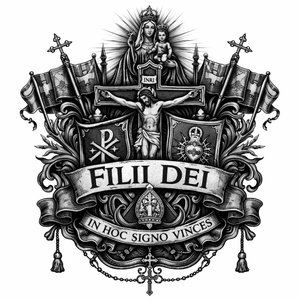
Liturgical Study - Usus Antiquior - First Sunday of Lent - 1962 Missale Romanum
(Quadragesima)
February 22, 2026
THEME — Now Is the Acceptable Time: Lent as Spiritual Combat
READINGS
Epistle: Second Corinthians 6:1–10
Gospel: Matthew 4:1–11
INTRODUCTION — LENT AS MILITIA CHRISTI
In the Traditional Roman Rite, Lent begins not with gentle metaphor, but with urgency and a summons to battle. From the Introit onward — “Invocabit me, et ego exaudiam eum” — the liturgy situates us in a moment of decision and conflict. Lent is not aesthetics. It is combat under grace.
As the ancient Quadragesima prayer reminds the faithful, this is the time to “put on the whole armor of God.”
2. EPISTLE — 2 CORINTHIANS: THE COST OF DISCIPLESHIP
Paul’s description of apostolic life is stark:
Tribulations
Watchings
Fasts
Purity
Long-suffering
This listing is not description of emotional drama. It is an ontology of the Christian life. As Pius XII taught in Mediator Dei, the liturgy forms disposition through spiritual realism — not spiritual comfort.⁸
Aquinas explains that virtue increases through endurance of trial (ST II–II, q.136).⁹ Lent is not a vacation from reality. It is a season of moral formation.
3. GOSPEL — THE TEMPTATION: WARFARE AND WORD
Though the Gospel text is the same as in the Novus Ordo, the Traditional Rite’s framing focuses on combat:
The Spirit leads Christ into the desert — not for reflection, but for confrontation. The temptations assault:
Appetite
Presumption
Power
Christ answers with Scripture — the Word as weapon. Here Lent becomes not symbolic imitatio Christi but participatory discipleship in warfare under God’s word.
4. THOMISTIC DEPTH — TEMPTATION, CONSENT, AND GRACE
Aquinas clarifies the distinction between temptation and consent: temptation is motion moved by another; sin is consent to that motion.¹⁰ Christ experiences the suggestion of sin but never consents.
Thus Lent trains the soul to say “No!” not merely outwardly but inwardly — a deeper break with disorder.
Moreover, grace does not eradicate struggle; grace elevates the will so that it wills rightly in the face of temptation — precisely the teaching of the Magisterium on prayer and fasting.¹¹
5. PRACTICAL CONSEQUENCE — DISCIPLINE WITHOUT COMFORT
The Traditional Rite’s release into Lent resists sentimental spirituality. It demands:
Fasting as discipline not diet
Prayer with Scripture as weapon
Mortification as interior formation
This is not self-help. It is militia Christi — the soldier’s vocation under Christ.
6. CONCLUSION — ENTER THE BATTLE WITH SCRIPTURE, NOT SELF-WILL
Lent is not a season of passive reflection.
It is a season of active obedience to the Word.
Christ entered the desert and resisted.
We enter Lent to learn from Him how to overcome — with obedience, not compromise.
ENDNOTES
Mediator Dei — on liturgical formation as moral formation.
ST II–II, q.136 — on the growth of virtue through trial.
ST I–II, q.74 — on sin as consent.
Evangelii Gaudium — on grace and spiritual struggle.