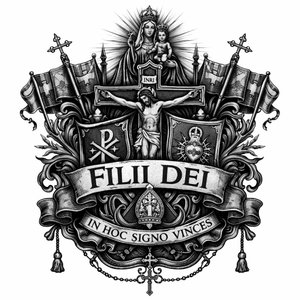
Like many people, I was baptized and “grew up” Catholic. Now—this was in the post-conciliar period. And, what that means is I was Catholic in the way most people are "into fitness." I owned the gear and could tell you exercise is important. I just didn't do it very regularly.
Now, don’t get me wrong. I got all my Catholic shots—baptism, confession, communion and confirmation. And, after a suitable period of adolescent rebellion and rejection, I even showed up more than just Christmas and Easter. I had the Creed memorized and knew all the Catholic Calisthenics. If you had asked me whether I believed in God, I would have said yes, and largely would have meant it. Now, if you had asked me when I last went to Confession, I would likely have changed the subject. I had no idea what the Eucharist really was or what the importance of it was. I got in the line like everyone else and I certainly knew that the right hand went under the left. That is a lukewarm Catholic. It wasn’t malicious non-compliance. And, it wasn’t necessarily rejection. The lukewarmness was the product of poor catechesis and a failure to take the reality of life and death seriously. Now, Our Lord's assessment of lukewarmness is not ambiguous: "So, because you are lukewarm, and neither cold nor hot, I will spew you out of my mouth."1 Not exactly a ringing endorsement of “I just try to be a good person.”
Here's why I changed. And, it isn't what most people assume.
Hurricane Season
I'll be candid: a serious event got my attention. But I'd had serious events before. Everyone has. We all face challenges. We all go to funerals. We all know, in the abstract, that we're going to die. And, we know our loved ones will too. We are given reasons to prepare ourselves constantly. And mostly what we do is we bring a casserole or send a card and then move on unchanged.
That's death as a tornado. And, if you live in tornado alley, you know your turn is coming someday. But it comes out of nowhere, and it always seems to hit the next town over. You say a prayer and go back to mowing the lawn.
A hurricane is different. Something is forming in the Caribbean. You watch the cone on the news. It's strengthening. You get to see it coming. Every one of us has the hurricane with our name on it. Sometimes it forms and strengthens overnight. Sometimes we get two weeks of warning. But we know it's out there, and we can see it coming.
What changed for me wasn't new information about death. What changed was who it came for. This time it wasn't my name on the cone. It was someone else's, someone I have obligations to. I wasn't the one in the storm's path, but I was close enough to feel the surge and outer bands. Samuel Johnson observed that "when a man knows he is to be hanged in a fortnight, it concentrates his mind wonderfully."2 It turns out the mind concentrates just as wonderfully when the noose is near someone you love. "It is appointed for men to die once, and after that comes judgment."3 That includes everyone under my roof.
That isn't a trauma response, any more than buying plywood in August is a panic attack. It's what rational people do with a forecast. Scripture had been issuing the advisory for years: "In all you do, remember the end of your life, and then you will never sin." The Church still urges us to prepare for the hour of our death. Whether we board up the windows is up to each of us. I just never had. And here's the irony: I knew the faith well for decades. I just never applied it. I knew I needed water and batteries for the hurricane. But having the supplies and using them are two different exercises. Let’s be frank—getting a house ready is work. It's far easier to hope the storm shifts at the last minute. That's what most of us do, and that’s how people end up on the roof waiting for a helicopter. The problem with this weather metaphor is that the Four Last Things (death, judgment, heaven, and hell) don't include a last-minute rescue chopper.
In my vocation as a Catholic husband and father, I am the leader, protector, and provider of my home. St. Paul doesn't leave the job description vague: "Fathers, do not provoke your children to anger, but bring them up in the discipline and instruction of the Lord."4 The Church is just as direct: "Parents have the first responsibility for the education of their children," and the grace of marriage gives them both the responsibility and the privilege of evangelizing their children.5 First responsibility. Not the parish's. Not the Catholic school's. Not the folk music minister with the ponytail and acoustic guitar. Mine.
When the aforementioned serious event came, it exposed my deep and abiding failure to prepare my household. Were my wife and children ready to face the final tornado or the hurricane? Had I trained them to get the batteries? The plywood? Had I taught them how to board up the house? All of a sudden it became clear that, despite the comfortable material life and “respectable” moral life I was providing, I was leading them to a place where they might have the batteries, and maybe the plywood, but would still likely end up on the roof. Nobody had ever shown them why the supplies mattered or how to use them. Least of all me.
Sheep Among Wolves
Here's the part that keeps me up at night. For years my plan for my children's faith, if you can call it a plan, was the one most of my generation was given and later adopted: expose your children to it, don't push too hard, and let them "find it themselves" lest you drive them away from it. It sounds open-minded, cautious and fair. It's actually abdication of duty when they need you most.
Think about what "find it yourself" actually means in practice. What 20-year-old or 17-year-old is going to independently choose an hour on his knees on Sunday morning, meatless Fridays, and reciting his sins to a priest in a dark box? Against what opposition? Against the schools, the universities, the entertainment industry, the phone in his pocket, and nearly every institution that actually matters to him, all aligned precisely and deliberately in the other direction. His professors call it superstition. His feed calls it bigotry. His friends call it weird. And Dad? Dad lived like it was optional, and kids learn more from what Dad does than from anything Dad says.
Nobody teaches a kid to swim by tossing him from the dock into the Gulf in September and yelling "Find the dock yourself!" We don't let our children "find" algebra, or driving, or not touching the stove. We teach those things, insist on them, and practice them until they stick, because we think they matter. Children are not stupid. They notice which things we actually think matter.
Christ did say, "Behold, I send you out as sheep in the midst of wolves."6 But notice WHEN He said it: after calling, teaching, and forming the Twelve Himself. He didn't hand them a pamphlet on the first day and wish them luck. I was sending my sheep out among the wolves with a baptismal certificate and not much else.
Scripture's counsel is simpler: "Train up a child in the way he should go, and when he is old he will not depart from it."7 Train. Not suggest. Not expose. Train.
Repair is harder than doing it right the first time. It is far easier to form a six-year-old than to re-form a teenager who has already absorbed the culture's catechism. It is a tremendous challenge, and I'm late to it. I know I'm late. But a late start in hurricane season still beats waiting on the roof for a helicopter. And the leading has to start with me. If I want them at Mass, they have to see me at Mass. I have to insist on its importance and give them expectations of attendance. If I want them in the confessional line, they have to see me standing in it. No father can rely upon authority alone. Because I said so is great when they’re 8. When they’re 18, you have to be prepared to engage the arguments and challenges against the faith. But, make no mistake, they still watch ACTUAL behavior. The father who says "do as I say" gets ignored but the father who goes first to confession at least gets watched.
Stay tuned for more on this story…
Endnotes
1. Revelation 3:16 (Revised Standard Version, Second Catholic Edition) [hereinafter RSV-2CE].
2. James Boswell, The Life of Samuel Johnson, LL.D. (London, Charles Dilly 1791) (entry for Sept. 19, 1777).
3. Hebrews 9:27 (RSV-2CE).
4. Ephesians 6:4 (RSV-2CE).
5. Catechism of the Catholic Church ¶¶ 2223, 2225 (2d ed. 1997) [hereinafter Catechism].
6. Matthew 10:16 (RSV-2CE).
7. Proverbs 22:6 (RSV-2CE).